
Hurt in a Minnesota Car Crash? Maximize Your Claim Now
If you were injured in a Minnesota auto accident, timely action and smart documentation can significantly impact your recovery. Learn the steps to protect your no-fault benefits, preserve evidence, and position your claim for maximum value.
Why Acting Quickly Matters
After a Minnesota car crash, early steps can affect medical coverage, wage loss reimbursements, and any potential pain-and-suffering recovery. Insurers begin evaluating right away. Prompt medical care, notice to your insurers, and evidence preservation help establish causation and minimize disputes.
Speak with a Minnesota injury lawyer if you have questions about deadlines or next steps.
Understand Minnesota’s No-Fault System
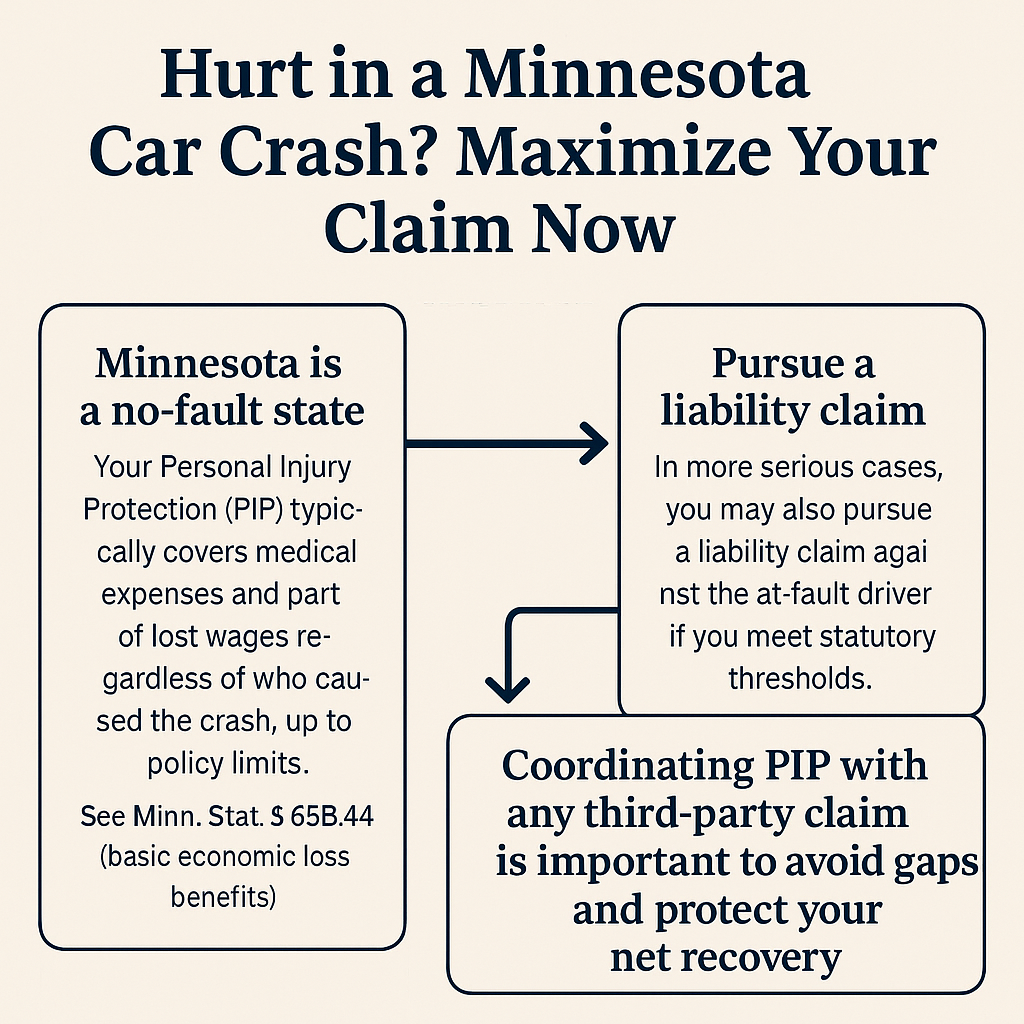
Minnesota is a no-fault state. Your Personal Injury Protection (PIP) typically covers medical expenses and part of lost wages regardless of who caused the crash, up to policy limits. See Minn. Stat. § 65B.44 (basic economic loss benefits).
In more serious cases, you may also pursue a liability claim against the at-fault driver if you meet statutory thresholds. See Minn. Stat. § 65B.51 (thresholds for tort liability). Coordinating PIP with any third-party claim is important to avoid gaps and protect your net recovery.
Immediate Steps to Strengthen Your Claim
- Report the crash and seek medical care promptly, even for seemingly minor symptoms.
- Notify your auto insurer and follow required claim procedures.
- Photograph vehicle damage, road conditions, skid marks, traffic controls, and visible injuries.
- Collect contact and insurance information for all drivers and any witnesses.
- Preserve dashcam footage and telematics data if available.
- Keep a symptom and treatment journal, including missed work and activity limitations.
- Avoid discussing fault or posting about the crash on social media.
Medical Documentation That Moves the Needle
Insurers scrutinize timelines and consistency. Attend all appointments, follow treatment plans, and ensure your providers note crash-related mechanisms of injury, objective findings, work restrictions, and likely future care. Keep visit summaries and billing statements to track expenses and verify PIP payments.
Meeting Minnesota’s Injury Thresholds
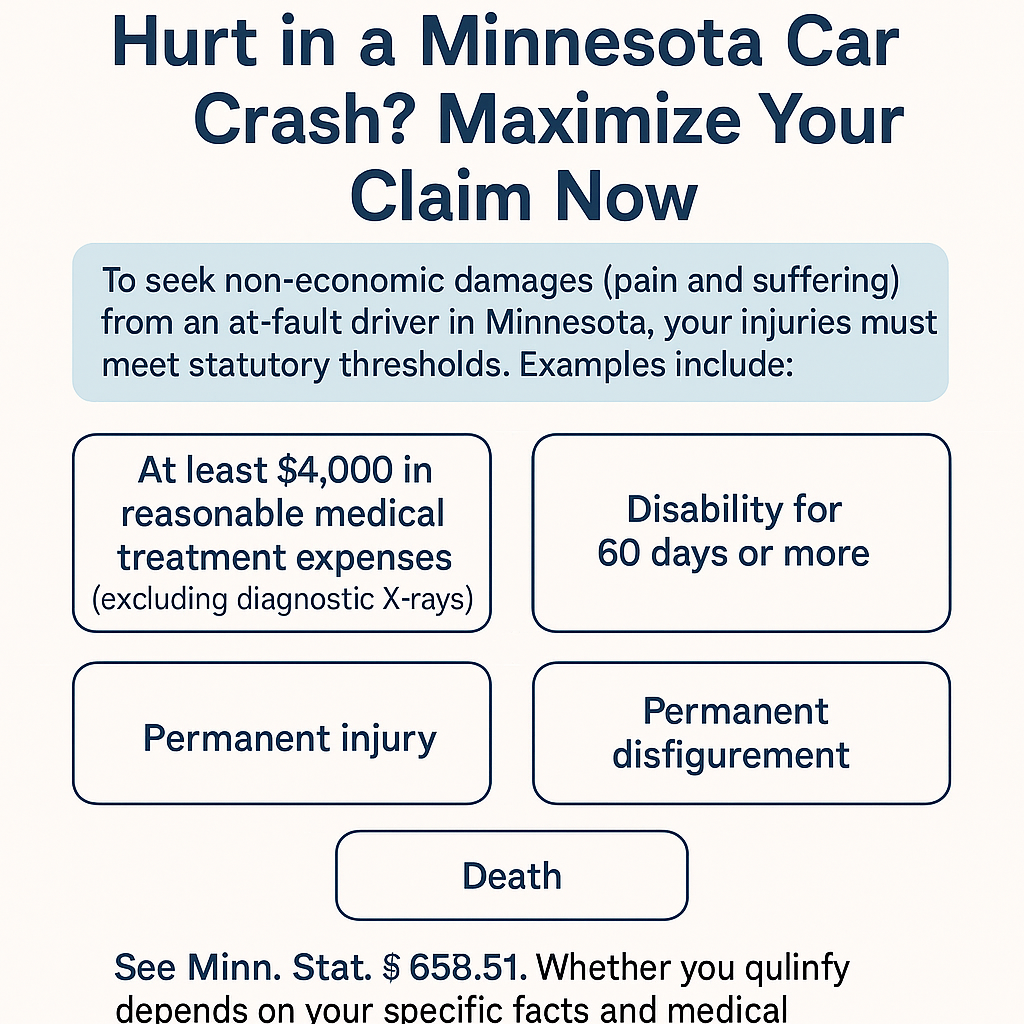
To seek non-economic damages (pain and suffering) from an at-fault driver in Minnesota, your injuries must meet statutory thresholds. Examples include: at least $4,000 in reasonable medical treatment expenses (excluding diagnostic X-rays), disability for 60 days or more, permanent injury, permanent disfigurement, or death. See Minn. Stat. § 65B.51. Whether you qualify depends on your specific facts and medical documentation.
Coordinating PIP, Health Insurance, and Liability Coverage
PIP generally pays first for crash-related medical bills in Minnesota. Health insurance may coordinate after PIP is exhausted, subject to plan rules. If you pursue a liability claim, your PIP carrier or health plan may assert subrogation or reimbursement rights; careful negotiation can sometimes reduce lien amounts and increase your net recovery. Talk with counsel about the best sequence for bills and reimbursements.
Valuing Your Claim
Claim value reflects medical expenses, wage loss, future care, loss of earning capacity, and—when eligible—non-economic damages. Factors that often increase value include clear liability, prompt and consistent treatment, objective diagnostic findings, and strong documentation of functional limitations. Gaps in care, unclear causation, or inconsistent statements can lower value.
Dealing With Insurance Adjusters
- Provide timely, accurate information to your own insurer for PIP benefits.
- Be cautious with recorded statements to other drivers’ insurers.
- Avoid signing broad medical authorizations or releases without advice.
- Document all communications and confirm agreements in writing.
- Consider legal counsel before accepting any settlement.
Evidence That Persuades
- Police report, crash diagram, and any citations issued.
- Photos, videos, dashcam footage, and 911 audio (if available).
- Medical records linking diagnoses and impairments to the crash.
- Employer verification of missed work and restrictions.
- Expert opinions on causation, prognosis, and future costs when appropriate.
Common Pitfalls to Avoid
- Delaying medical care or skipping recommended treatment.
- Posting on social media about the crash or activities inconsistent with claimed injuries.
- Ignoring health plan preauthorization or referral rules.
- Accepting a quick settlement before the full extent of injuries is known.
- Missing notice requirements under your policy or other applicable procedures.
Pro Tips to Protect Your Claim
- Use one pharmacy so medication histories are consistent and easily documented.
- Request visit summaries at each appointment and file them by date.
- Track mileage to treatment; PIP may reimburse reasonable transportation costs.
- Save repair estimates and total loss valuations to corroborate impact severity.
Claim Readiness Checklist
- ID, insurance cards, and policy numbers ready.
- Crash report or incident number noted.
- Photos/videos backed up to at least two locations.
- List of providers with dates of service.
- Wage verification from employer for missed time.
- Log of symptoms, restrictions, and pain levels.
- All insurer correspondence saved and organized.
When to Call a Minnesota Car Accident Lawyer
Consult a lawyer early if injuries are serious, fault is disputed, multiple insurers are involved, or you’re facing long-term limitations. A Minnesota attorney can evaluate threshold issues, coordinate benefits, handle subrogation, gather expert support, and negotiate or litigate for appropriate compensation.
What to Bring to Your Consultation
- Insurance cards and policy information (auto and health).
- Police report number and any citations.
- Photos, videos, and witness details.
- Medical bills, EOBs, and treatment summaries.
- Pay stubs or employer statements showing missed work.
- A timeline of symptoms and limitations since the crash.
Ready to get help? Contact our Minnesota car accident team to discuss your situation today.
FAQ: Minnesota Car Crash Claims
How long do I have to file a claim?
Deadlines vary by claim type and policy. Some PIP notices are due quickly, and Minnesota tort claims generally have multi-year statutes of limitations. Speak with counsel promptly to protect all timelines.
Will PIP cover all my medical bills?
PIP pays basic economic loss benefits up to your policy limits. After exhaustion, health insurance may apply, and any liability recovery may be subject to liens or reimbursements.
Do I have to meet a threshold to pursue pain and suffering?
Yes. Minnesota law requires meeting specific thresholds such as $4,000 in medical treatment expenses (excluding diagnostic X-rays), 60 days disability, permanent injury, permanent disfigurement, or death. See Minn. Stat. § 65B.51.
Should I speak to the other driver’s insurer?
Provide basic insurance details only. Avoid recorded statements or broad authorizations without legal advice.
What if I was partially at fault?
Minnesota follows comparative fault. Your recovery may be reduced by your percentage of fault, and you cannot recover if your fault exceeds the other party’s.
Note for Minnesota readers: This page summarizes Minnesota’s no-fault and threshold rules in general terms and links to the governing statutes (§ 65B.44; § 65B.51). Always check the current law or consult counsel, as rules and deadlines can change.


